YunGang Industrial Zone, Yuhuan County, Zhejiang province, China
  +86-18967680938
 Language
 English
 Deutsch
 عربى
عربى
Home / News / Industry News / Can Manual Wire Crimping Pliers Make Small Electrical Tasks More Reliable?




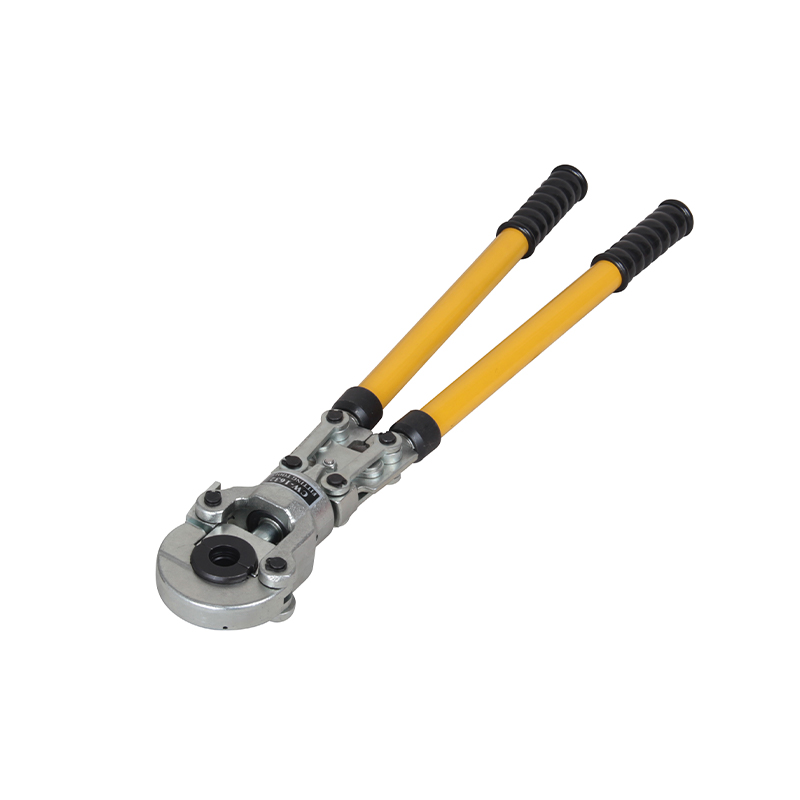
In a world filled with powered tools and automated equipment, it's easy to overlook simple hand tools. Yet Manual Wire Crimping Pliers continue to play a steady role in electrical work, automotive repair, and DIY projects. They may not look complex, but their impact on connection quality and safety is significant.
At its core, crimping is about creating a secure mechanical and electrical bond between a wire and a connector. When done properly, it reduces resistance, prevents loosening, and supports long-term durability. That's where Manual Wire Crimping Pliers quietly prove their value.
Electrical systems depend on reliable connections. Loose or poorly crimped terminals can cause intermittent faults, overheating, or even equipment failure. While soldering has its place, crimping is often faster and cleaner, especially for terminals designed specifically for compression.
Manual Wire Crimping Pliers allow users to apply consistent pressure to terminals without relying on electricity or batteries. This simplicity makes them practical for fieldwork, tight spaces, and situations where power tools are inconvenient. For technicians working on-site, having a dependable manual option is often reassuring.
One advantage of using Manual Wire Crimping Pliers is the level of control they offer. The user can feel the resistance as the terminal compresses around the wire. That tactile feedback helps determine whether the connection is secure or needs adjustment.
Many models feature ratcheting mechanisms that ensure full compression before releasing. This reduces the risk of incomplete crimps and promotes uniform results. Instead of guessing whether enough force has been applied, the built-in mechanism guides the process.
For hobbyists and professionals alike, that combination of simplicity and control makes these pliers practical across a wide range of tasks.
Manual Wire Crimping Pliers are not limited to one type of connector. Depending on the die configuration, they can handle insulated terminals, non-insulated lugs, ferrules, and even certain coaxial connectors. This flexibility allows one tool to support multiple projects.
In automotive repairs, they help secure wiring harnesses. In home improvement, they assist with lighting installations or appliance wiring. In small electronics, they ensure clean and stable connections. Their adaptability makes them a steady presence in toolboxes of various trades.
Not all crimping pliers are the same. When selecting Manual Wire Crimping Pliers, consider wire gauge compatibility, handle comfort, and build quality. A well-designed handle reduces strain during repeated use, while hardened steel jaws improve durability over time.
It's also helpful to match the tool to the connectors being used. Using the correct die shape ensures proper compression and avoids damaging terminals. Paying attention to these details contributes to safer and more consistent outcomes.
Routine maintenance matters as well. Keeping the jaws clean and free from debris helps maintain alignment and performance.
While powered crimping tools can speed up large-scale production, manual tools encourage attention to detail. Each crimp requires positioning, alignment, and a steady squeeze. This process may take slightly longer, but it promotes awareness of wire placement and connector fit.
For smaller projects or repair work, that extra care often outweighs the need for rapid output. In fact, many technicians appreciate the balance between efficiency and precision that Manual Wire Crimping Pliers provide.
Despite technological changes in the electrical field, Manual Wire Crimping Pliers remain relevant. They are compact, easy to transport, and independent of external power sources. Whether working in a workshop, garage, or remote job site, they offer consistency when it matters.
In the end, reliability in electrical connections often comes down to careful preparation and proper tools. While they may not attract attention, manual crimping pliers quietly support safe and stable wiring. Sometimes, steady hand tools are exactly what a task requires—no batteries, no noise, just firm and dependable pressure applied at the right moment.