YunGang Industrial Zone, Yuhuan County, Zhejiang province, China
  +86-18967680938
 Language
 English
 Deutsch
 عربى
عربى



Angle iron is everywhere. Shelves. Frames. Brackets. Trailers. The metal shape is simple. Two legs at 90 degrees. But working with angle iron by hand is slow. A torch cuts it. A drill punches holes. A grinder notches it. An angle iron processing machine does all three. Faster. More precise. Less waste. Here is what buyers should know before buying one.
It cuts angle iron to length
A angle iron processing machine has a shear. The shear chops through the angle iron. Both legs at once. No torch. No grinding. The cut is square. The edges are clean. No slag. No cleanup.
The shear capacity depends on the machine. Small machines cut 2-inch angle iron. Large machines cut 6-inch or bigger. Thickness matters too. 1/4 inch. 3/8 inch. 1/2 inch. The machine needs to match your material.
It punches holes in the legs
The punch station pushes a hole through one leg or both. A angle iron processing machine can punch round holes. Square holes. Oval holes. The die changes for different hole shapes.
Punching is faster than drilling. No chips. No bit changes. The hole is accurate. The tooling lasts for thousands of hits.
It notches the ends for coping and fitting
Angle iron needs notches to fit together. A coped notch lets one piece sit over another. A angle iron processing machine has a notching station. The notcher cuts a V or a rectangle out of the leg. The two pieces fit flush.
Here is what a processing machine can do:
Manual machines for small shops and low volume
A manual angle iron processing machine uses a foot pedal or hand lever. The operator positions the angle iron. Pulls the lever. The shear cuts. The punch punches. The notcher notches.
Manual machines are cheaper. Slower. Good for prototype work or small batches. The operator gets tired after a few hundred pieces.
Hydraulic machines for higher volume
Hydraulic machines use a pump and cylinder. The operator pushes a button. The machine cycles. A angle iron processing machine with hydraulic power is faster. Consistent. The operator does not get tired.
Hydraulic machines cost more. They need a power source. 220V or 440V. They are heavier. Not portable.
CNC machines for automation
A CNC angle iron processing machine takes digital input. A drawing in DXF format. The machine cuts, punches, and notches automatically. The operator loads angle iron. The machine does the rest.
CNC machines are the expensive. They are the fastest. They are the accurate. Good for high-volume production.
Capacity matches your material size
A angle iron processing machine is rated by angle size and thickness. A 3x3x1/4 machine handles 3-inch angle iron up to 1/4 inch thick. Do not push it. A bigger angle will jam. A thicker piece will break the tooling.
Here is what capacity numbers mean:
Tooling availability and changeover time
The punch and die need to change for different hole sizes. A angle iron processing machine with quick-change tooling saves time. Loosen one bolt. Slide the punch out. Slide the new one in. Tighten.
Machines with bolt-on tooling take longer. Several bolts. Alignment. The operator spends more time changing tools than processing parts.
Notching depth and width
The notcher removes material from the leg. A angle iron processing machine notcher has a depth stop. Set the depth. The notcher cuts that far. Too deep, and the leg is too weak. Too shallow, and the pieces do not fit.
Notcher width should match your application. A 2-inch notch is common. Larger notches need larger machines.
The shear blade dulls quickly
Cheap blades are soft steel. A angle iron processing machine with soft blades dulls after a few hundred cuts. The cut is ragged. The angle iron does not fit square. The blade needs replacement.
Good blades are hardened steel. They last for thousands of cuts. They can be resharpened.
The punch breaks on thick material
Cheap punches are brittle. A angle iron processing machine rated for 1/4 inch will break if you punch 5/16 inch. The punch shatters. The pieces fly. The operator is at risk.
Good punches are made from tool steel. Heat treated. Tough. They deform before they break.
The frame flexes under load
Cheap machines have thin frames. A angle iron processing machine with a flexing frame produces inaccurate parts. The cut is not square. The notch is off. The holes are misaligned.
Good machines have thick steel frames. Ribbed for stiffness. The frame does not move.
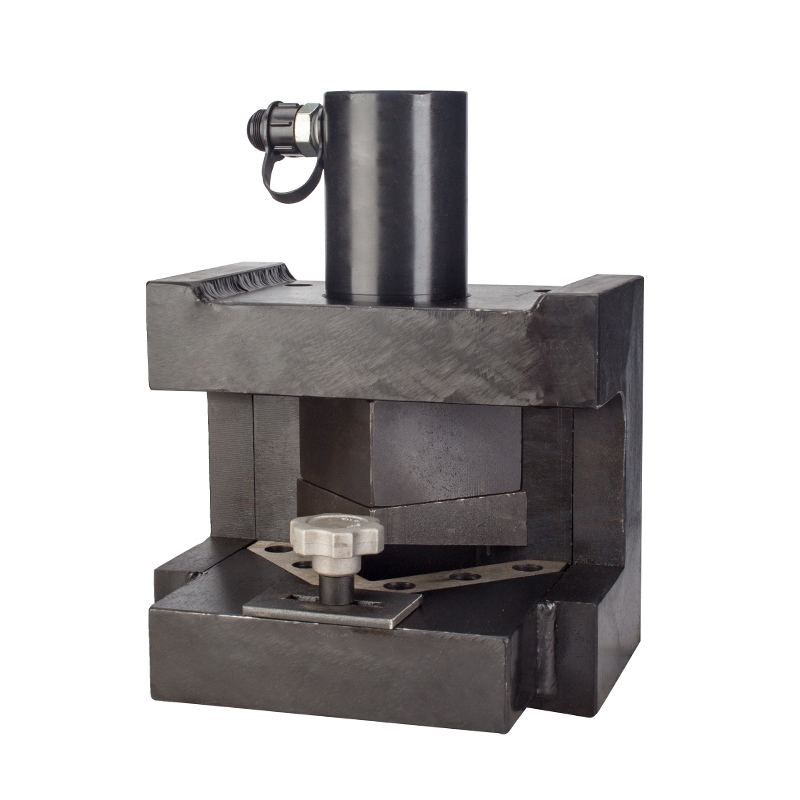
The notcher jams
The notcher removes a slug of metal. The slug needs to fall clear. A angle iron processing machine with poor slug ejection jams. The operator stops. Clears the jam. Restarts. Time wasted.
An angle iron processing machine speeds up fabrication. One machine does what three tools used to do. Cut. Punch. Notch.
Match the machine to your material. Do not oversize. Do not undersize. Get quick-change tooling if you change hole sizes often. Look for hardened blades and punches. Check the frame stiffness. Test the notcher ejection.
A good machine costs more upfront. It lasts for years. It pays for itself in labor savings. A cheap machine breaks. The operator gets frustrated. The work slows down. Not worth the lower price.
Angle iron is not going away. Shelves. Frames. Brackets. Trailers. All need processing. A good angle iron processing machine makes the job easy. Buy one. Use it. Your shop will thank you.