YunGang Industrial Zone, Yuhuan County, Zhejiang province, China
  +86-18967680938
 Language
 English
 Deutsch
 عربى
عربى
Home / News / Industry News / How Does a Battery Press Tool Work Across Battery Production Processes




A Battery Press Tool is used when parts in a battery module need to stay aligned while being fitted together. In many assembly lines, the pressing step is not only about force. It is also about control, balance, and keeping each part in the right position while work moves forward.
In battery module assembly, small shifts can create later issues. A part that sits slightly off center may still fit at first, but it can affect the next process. That is why the tool plays an important role in this process. It helps hold the structure in place so the assembly can move in a more orderly way.
The tool is usually placed at a point where pressure is needed without creating a rough contact. The force should feel steady rather than sudden. When pressure is applied in that way, the module can stay compact while the surrounding parts remain in their intended shape.
A few practical functions stand out:
In many factories, people do not think of pressing as a separate task. They treat it as part of the overall fitting process. That view is useful, because the pressing stage often affects how smoothly the rest of the work goes.
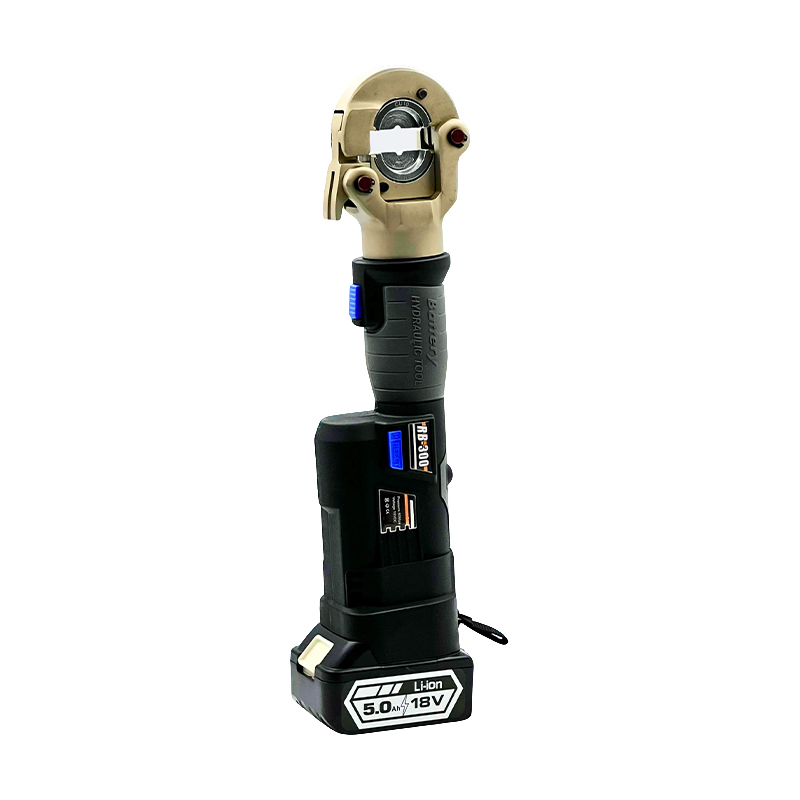
Consistency is one of the quiet goals in battery manufacturing. It does not always draw attention, but it shapes the quality of every assembled unit. When a Battery Press Tool is used in the same way from one cycle to the next, it helps reduce variation in the way parts are fitted.
That matters because battery manufacturing depends on repeated actions. If one part is pressed more firmly than another, or if one module is held differently from the next, the final result can start to vary. A Battery Press Tool helps limit that kind of unevenness by giving the assembly process a steadier pattern.
The benefit is not just mechanical. It also affects workflow. When workers or machines know what kind of pressure to expect, the process becomes easier to control. Fewer small corrections are needed. The assembly line can move with less hesitation.
Consistency also helps in situations where the same type of module is produced repeatedly. Even when the line is running smoothly, small differences can still appear if pressure is not handled well. This solution gives the process a more repeatable shape, which is useful for both manual and semi-automated work.
In practice, this does not mean the tool does everything on its own. It works together with the rest of the assembly setup. But once it is set correctly, it can make the process feel more controlled and less dependent on guesswork.
Pressure does not only need to exist. It needs to spread in a sensible way. That idea is at the center of Battery Press Tool design, especially in energy storage systems where the structure has to stay stable after assembly.
If pressure collects in one small area, the result can feel uneven. One side may receive more force than another, and that difference can influence how the parts sit together. A good design tries to avoid that by spreading contact more evenly across the surface.
This matters for several reasons.
First, even pressure helps the structure settle more naturally. Parts are less likely to tilt or bend under a concentrated load. Second, it can reduce the chance of strain showing up in one isolated point. Third, it supports a cleaner alignment pattern across the full assembly.
When engineers or manufacturers think about pressure distribution, they usually look at how the force travels through the tool and into the module. The shape of the contact surface, the stiffness of the frame, and the way the tool closes all affect that spread.
A useful way to think about it is this: a Battery Press Tool should guide force, not push blindly. The better the distribution, the more balanced the assembly tends to feel.
In energy storage systems, balance is important because the structure often has to remain firm over time. A tool that applies force in a controlled way can help support that goal from the very beginning of the process.
How Press Systems Adapt to Cylindrical Prismatic and Pouch Cell Designs
| Cell Structure | Main Contact Character | Tool Adjustment |
|---|---|---|
| Cylindrical | Rounded surface | Narrower contact focus |
| Prismatic | Flat side surfaces | Broader and steadier support |
| Pouch | Flexible outer body | Softer and more careful pressure control |
A Battery Press Tool can appear in more than one part of the production line. It is not limited to a single step, because pressing and alignment may be needed at different moments as the module moves through assembly.
At the start, the tool may help position parts so they enter the frame correctly. Later, it may hold the structure in place while the assembly is closed or fixed. In a later stage, it may support final alignment before the unit moves onward.
That spread of use gives the tool a practical role across the line.
Some common places where it fits into the workflow include:
Each stage has its own purpose, but the tool helps in a similar way: it keeps the structure controlled while the work continues. That is useful because battery assembly often depends on clean transitions. One step should lead naturally into the next, with little need for correction.
A Battery Press Tool can also help when the process changes from manual handling to machine-assisted work. In those cases, the tool acts as a bridge between the two, keeping the parts stable while the line moves forward.
In many factories, this kind of tool is valued not because it is complicated, but because it solves a very practical problem. It helps parts stay where they should be while the rest of the production process does its job.
The structure of a battery module is not only defined during final assembly. The way it is pressed and held in position during early stages can influence how stable it remains later. A Battery Press Tool plays a quiet but important role in that process.
When pressure is applied in a controlled and balanced way, internal parts are more likely to stay in alignment. If pressure is uneven or inconsistent, small shifts may remain inside the structure after assembly is completed. These shifts are not always visible at first, but they can affect how the module behaves over time.
A well-shaped pressing approach helps in several ways:
Safety in battery pack assembly is closely linked to how parts are handled before they are fully secured. It supports this stage by helping keep components stable while they are being positioned and fixed.
During assembly, there are moments when parts are not yet fully locked in place. At that stage, movement or uneven force can create unwanted stress. The tool helps reduce that risk by holding the structure steady.
Its role in safety can be understood in a few practical points:
This controlled environment is important because battery packs involve tightly arranged components. Even small misalignment during assembly can lead to mechanical stress later. The pressing stage helps reduce that possibility by keeping everything in place while the system is still being built.
How to Select a Press Tool for Different Cell Formats and Production Conditions
| Consideration Area | What It Relates To | Practical Focus |
|---|---|---|
| Cell structure | Shape and rigidity | Contact method and support style |
| Production flow | Manual or automated steps | Level of control and adjustment |
| Handling sensitivity | Material response to pressure | Force distribution approach |
Calibration in a Battery Press Tool refers to how the applied force and movement are adjusted so that each pressing action follows a predictable pattern. When calibration is stable, the tool behaves in a more consistent way across repeated operations.
In industrial assembly, small differences in pressure can gradually influence how parts are positioned. If calibration is not aligned with the process, those differences may accumulate and affect overall fit quality.
A properly adjusted tool helps in several areas:
Accuracy in this context is not only about measurement. It is also about how the tool behaves during continuous use. Over time, small mechanical changes can appear, so periodic adjustment helps maintain a stable working pattern.
Calibration also affects how operators interact with the tool. When the system responds in a predictable way, less correction is needed during operation. This allows the assembly process to stay smoother and more continuous.
When choosing a source, the focus is usually on whether the equipment can match real production conditions over time. Industrial use places steady demands on pressing stability, alignment behavior, and mechanical durability.
One useful approach is to evaluate how the manufacturer handles design flexibility. Since battery structures vary, a tool that can be adjusted to different formats is often more practical in long-term use.
Another point is how the tool integrates with existing production setups. It should fit into the line without requiring major changes to surrounding equipment. Smooth integration usually helps reduce setup complexity.
It can also be helpful to consider how the tool is supported after installation. In real environments, adjustments may be needed as production conditions change. A system that allows straightforward tuning tends to be easier to maintain.
Key aspects often reviewed include:
A Battery Press Tool is not only a standalone device but part of a wider production environment. Its value is closely linked to how well it fits into that environment and how consistently it performs under routine conditions.