YunGang Industrial Zone, Yuhuan County, Zhejiang province, China
 +86-18967680938

 Language
 English
 Deutsch
 عربى
Home / News / Industry News / CAC-110 10mm Angle Steel Cutter: Precision Hydraulic Processing for Reliable Structural Work




Angle steel is widely used in towers, frames, supports, bridges, industrial platforms, transmission structures, and general fabrication. Although angle sections are relatively simple in shape, processing them accurately and efficiently can be challenging. Cutting thick steel with manual equipment may require substantial effort, produce inconsistent results, and create unnecessary risks for operators. A dedicated hydraulic angle steel cutter provides a more controlled and productive solution.
The CAC-110 10mm Angle Steel Cutter is designed for professional angle iron processing applications where cutting force, dimensional flexibility, durability, and ease of operation are important. With a maximum force of 350 kN, the machine is built to process angle steel with thicknesses from 3 mm to 8 mm and widths from 30 mm to 110 mm. Its compact weight of approximately 33 kg makes it suitable for workshops, maintenance teams, construction sites, utility projects, and mobile fabrication operations.
This article examines the structure, performance, advantages, applications, manufacturing quality, and operating considerations of the CAC-110. It also explains how the product compares with common alternative cutting methods and why hydraulic equipment can provide a practical advantage in demanding metalworking environments.
Angle steel, also called angle iron or L-section steel, consists of two legs joined at a right angle. It is commonly manufactured in equal-angle and unequal-angle profiles. Depending on the project, the material may need to be cut into specific lengths, adjusted for assembly, or prepared for use in structural frameworks.
Traditional angle steel processing often relies on abrasive saws, cutting torches, hand-operated shears, or general-purpose workshop machines. Each method has benefits, but each also presents limitations. Abrasive cutting can create sparks, heat, noise, dust, and burrs. Thermal cutting may cause heat-affected zones or require additional edge treatment. Manual shearing can become difficult when material thickness and width increase.
A hydraulic angle steel cutter addresses these challenges by applying concentrated mechanical force through a purpose-designed cutting mechanism. The cutting process is more direct than abrasive removal and generally produces a clean, repeatable cut when the material is positioned correctly and the tooling is maintained.
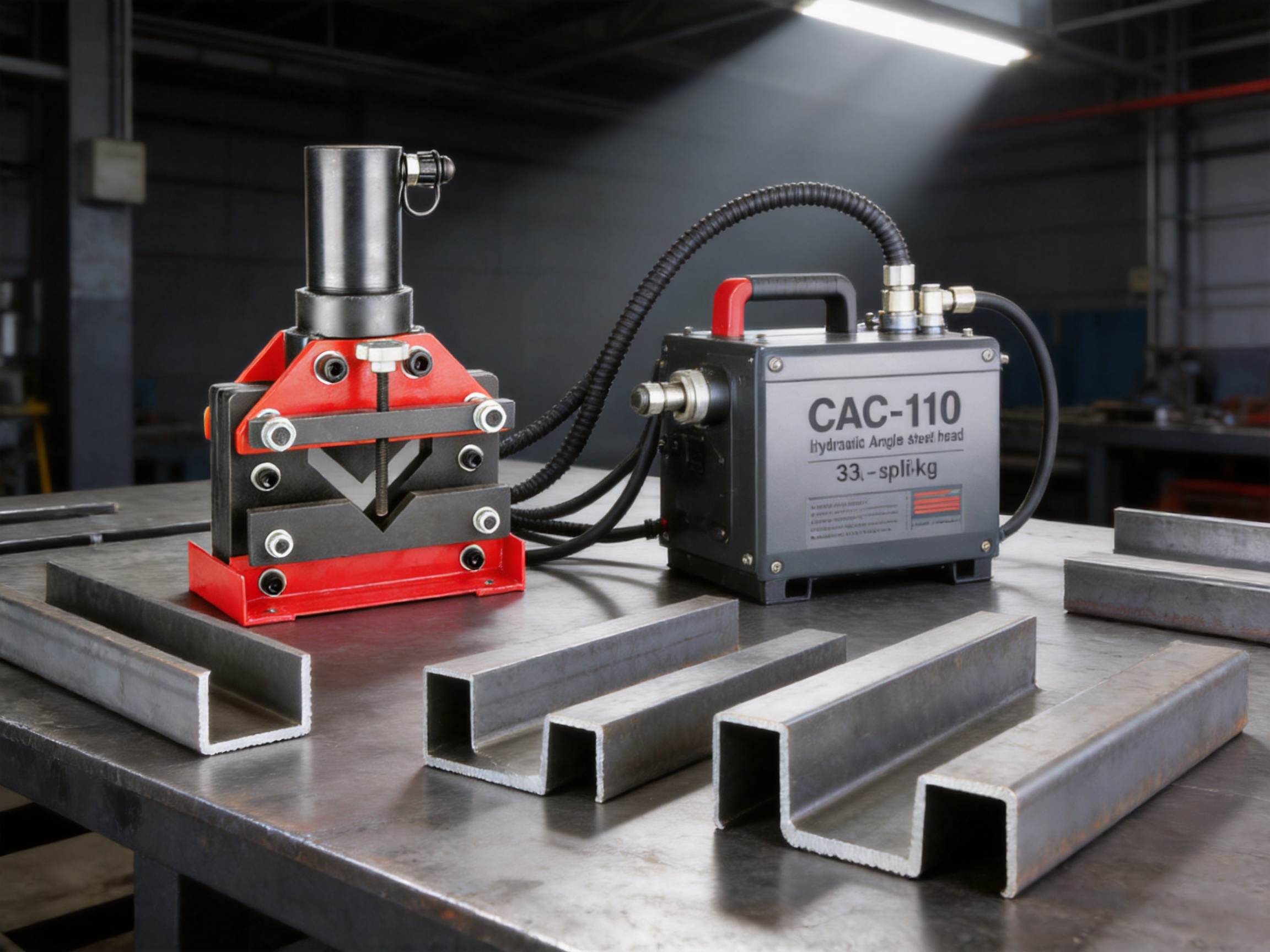
The CAC-110 is intended for users who need a dedicated tool rather than a large fixed machine. Its split design allows the cutter head to be connected to a compatible hydraulic pump. This arrangement separates the working head from the power source, allowing users to select or integrate a hydraulic pump that matches their operating environment and workflow.
The following specifications define the primary working range and configuration of the CAC-110 10mm Angle Steel Cutter.
| Specification | Details |
|---|---|
| Model | CAC-110 |
| Product type | Hydraulic angle steel cutter |
| Maximum force | 350 kN |
| Angle steel thickness range | 3 mm to 8 mm |
| Angle steel width range | 30 mm to 110 mm |
| Approximate weight | 33 kg |
| Configuration | Split design requiring a compatible hydraulic pump |
| Primary application | Cutting and processing angle steel |
The specification range gives the CAC-110 a useful balance between capacity and portability. It is not designed as a general-purpose cutter for every possible structural profile. Instead, its working parameters are focused on angle steel within the stated thickness and width range. This specialization helps the tool deliver concentrated force and practical handling for the jobs it is designed to perform.
The 350 kN maximum force is one of the most important features of the CAC-110. Hydraulic force allows the machine to process steel through controlled mechanical pressure rather than relying solely on operator strength. This is especially valuable when working with thicker angle sections or when repeated cuts are required throughout a project.
High hydraulic force supports more stable cutting performance because the working head can maintain strong pressure during the cutting cycle. When the tool is correctly aligned and supplied by a suitable hydraulic pump, the cutting action can be consistent across repeated operations. This consistency is valuable in fabrication work, where irregular cuts may increase material waste or create fitting problems during assembly.
Compared with hand-operated cutting tools, hydraulic force reduces the physical burden on workers. The operator is primarily responsible for positioning the material, checking alignment, controlling the pump, and monitoring the cutting cycle. The hydraulic system performs the demanding part of the operation.
The force rating also gives users a practical indication of the tool’s intended application level. While the actual cutting capability depends on material grade, profile geometry, blade condition, pump performance, and operating technique, a 350 kN system is suitable for serious professional work within the specified material range.
Mechanical cutting quality depends not only on force but also on how that force is delivered. A hydraulic system can provide a controlled stroke and repeatable pressure cycle. This reduces the variation that may occur when an operator uses a manual lever or portable abrasive tool.
Repeatability is particularly important in structural fabrication. If angle pieces are cut for a series of frames, brackets, or support assemblies, consistent lengths and clean cut lines can simplify later drilling, welding, and installation. The CAC-110 helps create a more organized workflow by providing a dedicated process for angle steel preparation.
The CAC-110 is designed to process angle steel with thicknesses from 3 mm to 8 mm and widths from 30 mm to 110 mm. This range covers many medium-duty and heavy-duty angle steel applications used in construction, fabrication, utility work, and industrial maintenance.
The lower end of the range is useful for lighter structural pieces, brackets, supports, and framework components. The upper end allows the tool to address larger angle sections that may be difficult to process efficiently with basic manual equipment. The 110 mm width capacity provides flexibility for jobs requiring broader angle profiles.
Users should always verify the exact dimensions of the material before beginning work. Angle steel width, leg length, thickness, steel grade, and profile geometry can all affect cutting performance. Material should be positioned so that the cutting mechanism engages the section correctly and the workpiece remains stable during the hydraulic cycle.
The stated range should be treated as an operating guideline rather than a reason to exceed the machine’s intended capacity. Attempting to process material outside the recommended range may damage the cutter, reduce cutting quality, or create a safety hazard. Proper selection of material and tool capacity is an essential part of professional operation.
The CAC-110 offers several practical advantages when compared with common angle steel processing methods. These advantages are most noticeable in environments where repeatability, reduced physical effort, clean operation, and mobility are important.
Manual cutting tools may be inexpensive and convenient for occasional light work, but they generally require greater physical effort. Cutting thicker angle steel repeatedly can lead to operator fatigue, slower production, and inconsistent results. Manual mechanisms may also struggle with wider profiles.
The CAC-110 uses hydraulic power to provide substantially greater cutting force. This allows operators to complete demanding cuts with less direct exertion. Reduced fatigue can improve productivity and help maintain better attention to material positioning and safety procedures.
Abrasive saws remove material through a rotating disc. They can be useful in many workshops, but they commonly produce sparks, noise, dust, heat, and abrasive residue. The cutting disc also wears during use and must be replaced periodically.
A hydraulic angle steel cutter uses a shearing action rather than abrasive removal. This can reduce airborne dust and spark generation during normal operation. It may also reduce the amount of post-cut cleaning required. In work areas where sparks are undesirable or where a quieter, more controlled method is preferred, hydraulic cutting can be a valuable alternative.
Gas or plasma cutting can process metal efficiently, but thermal methods require heat sources, consumables, ventilation, and appropriate fire controls. Heat may alter the edge or create a heat-affected zone, depending on the process and material.
The CAC-110 performs cold mechanical cutting. Because the process does not depend on a flame or electric arc at the cutting edge, it can be suitable for applications where heat input must be minimized. Operators should still inspect the cut edge and follow standard procedures for removing burrs or sharp corners when necessary.
Large hydraulic ironworkers and stationary processing centers can provide extensive capabilities, but they often require more floor space, higher installation costs, and dedicated electrical or hydraulic infrastructure. They may be less practical for field service or distributed work locations.
At approximately 33 kg, the CAC-110 is significantly more portable than many fixed processing systems. Its split configuration also makes it easier to transport the cutting head separately from the hydraulic pump. This can be beneficial for contractors, maintenance teams, and installers who need to move equipment between work areas.
The CAC-110 uses a split design. This means the cutter head is separate from the hydraulic power source and must be connected to a compatible hydraulic pump. This configuration provides flexibility but also requires correct system matching.
A split hydraulic design can offer several advantages. First, users may be able to select a pump based on available power sources, working speed, site conditions, and existing equipment. A workshop may use one pump with several compatible hydraulic tools, reducing the need to purchase a separate integrated power unit for every tool.
Second, separating the cutter head from the pump can improve portability. The operator can place the pump in a convenient location while positioning the cutter head close to the workpiece. This arrangement may be useful when working in restricted spaces or on large structures that cannot be easily moved to a machine shop.
Third, a split design can simplify equipment organization for professional tool users. Contractors who already operate hydraulic crimpers, cutters, punches, or cylinders may be able to coordinate their hydraulic equipment according to project requirements, provided that pressure, flow, connectors, and safety requirements are compatible.
Because the CAC-110 requires a matching hydraulic pump, users should confirm compatibility before operation. Important factors include maximum working pressure, hydraulic flow, connection type, hose condition, control method, and the pump’s ability to support the required cutting cycle.
The pump should be capable of supplying the cutter within the manufacturer’s specified operating parameters. Using an unsuitable pump may result in incomplete cutting, excessive cycle times, unstable operation, or damage to the tool. Hydraulic hoses and couplings should also be rated for the operating pressure and inspected before use.
The split design is therefore both a flexibility feature and a responsibility. It gives users more configuration options, but safe and effective operation depends on proper system selection and assembly.
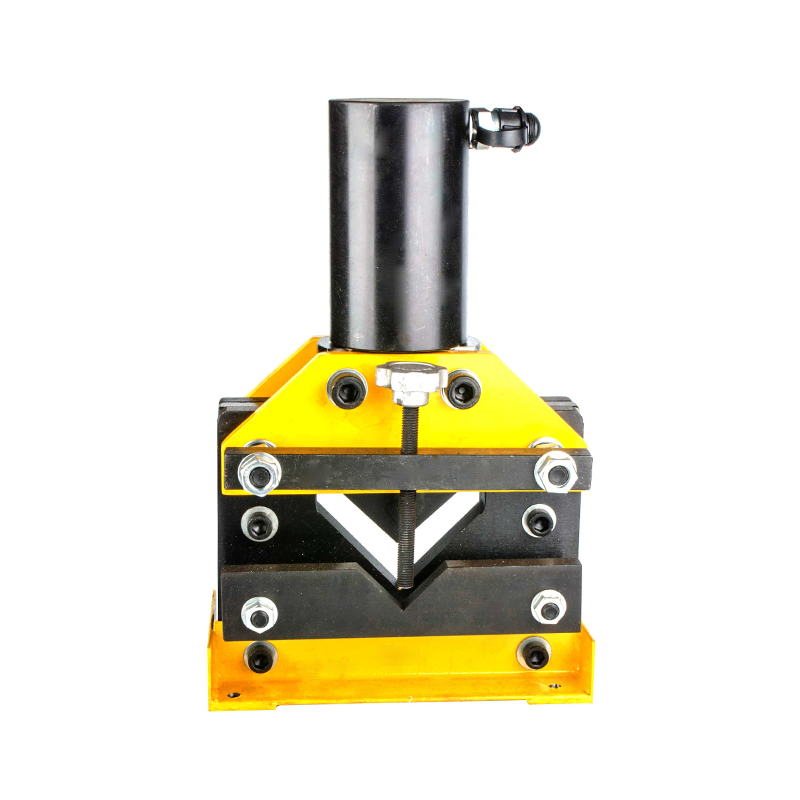
CAC-110 10mm Angle Steel Cutter
A professional hydraulic tool depends on more than its published force rating. Material selection, machining accuracy, heat treatment, assembly control, hydraulic sealing, inspection, and final testing all influence performance. Taizhou Ruiba Tools Co., Ltd. has developed its production capabilities around hydraulic tools, battery-powered tools, mechanical pliers, and related equipment.
The company was founded in 2013 and operates in YunGang Industrial Zone, Yuhuan County, Zhejiang Province, China. Its product range includes hydraulic crimping tools, cable cutters, rebar cutters, busbar processing tools, hydraulic jacks, hydraulic gear pullers, hydraulic pumps, pipe benders, cable strippers, cylinders, and angle iron processing machines.
This broad product experience is relevant to the CAC-110 because hydraulic tool manufacturing requires knowledge of force transmission, structural loading, sealing systems, working mechanisms, and operator handling. Experience across multiple tool categories can support more practical product development and more efficient component management.
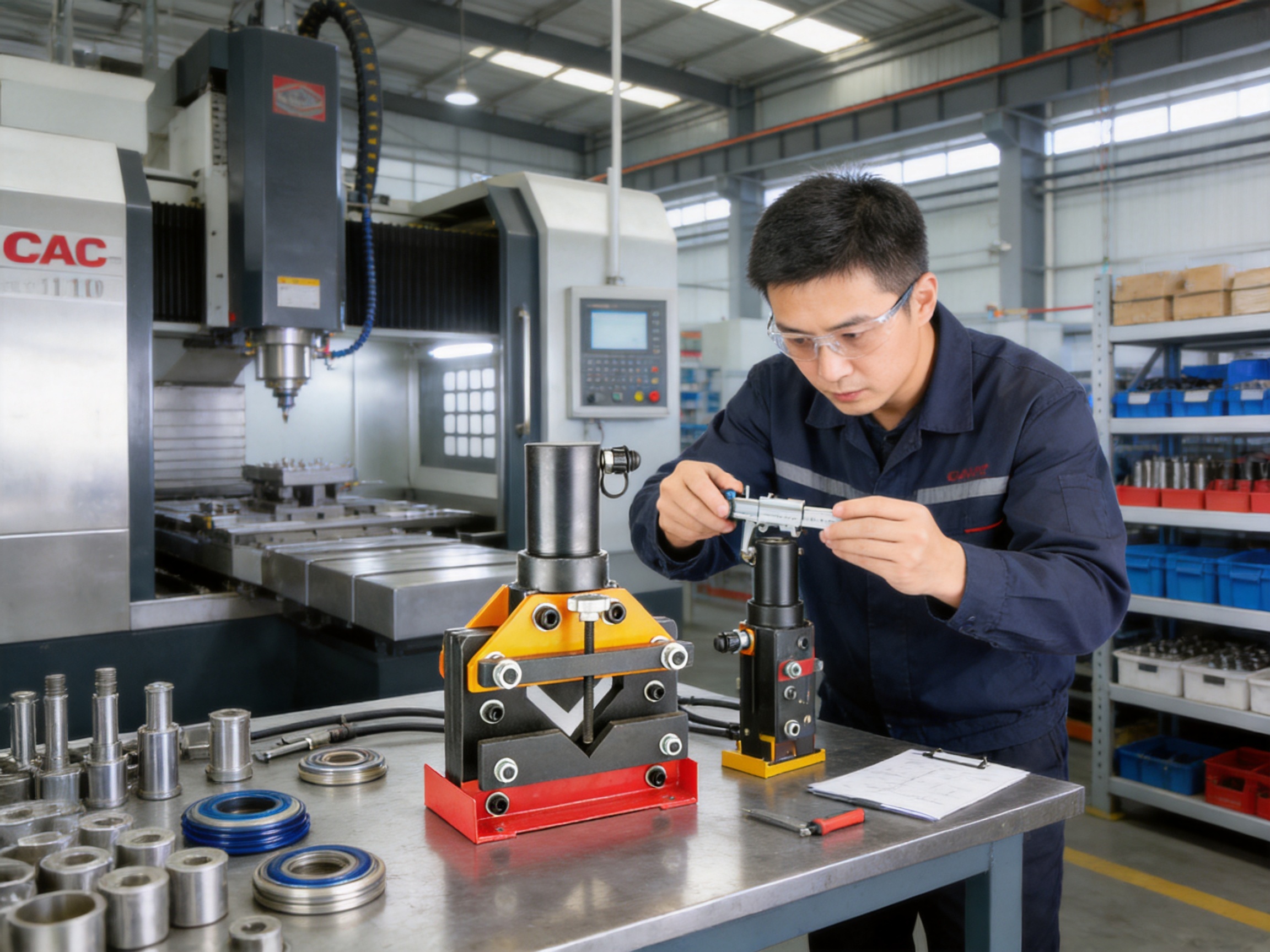
The company uses CNC machine tools and CNC machining centers in its manufacturing operations. CNC machining can improve dimensional consistency for critical components such as cutter bodies, mounting surfaces, guide structures, connection points, and moving parts.
Accurate machining helps ensure that the working components align correctly during operation. For a hydraulic cutting tool, alignment is important because uneven loading can reduce blade life, affect cut quality, or place unnecessary stress on the body. Consistent machining also supports repeatable assembly across different production batches.
Modern machining equipment can reduce dependence on inconsistent manual processing and help production teams maintain defined tolerances. It also makes it easier to reproduce approved designs and support customized manufacturing based on customer drawings or samples.
The company maintains production workshops and warehouses equipped with manufacturing and quality inspection facilities. A structured production environment allows components to move through machining, assembly, inspection, storage, and shipment in an organized manner.
Quality inspection is particularly important for hydraulic products. Inspection may involve checking dimensions, surface condition, assembly fit, hydraulic connections, pressure behavior, and functional operation. Although users should follow the specific inspection records supplied with their equipment, a controlled factory process provides an important foundation for product reliability.
Taizhou Ruiba Tools has a production team with more than ten years of experience. Experienced personnel can contribute to improved assembly practices, problem identification, process optimization, and practical product feedback.
Hydraulic tools often require attention to details that are not obvious from external appearance. Seal installation, fastener tightening, moving-part clearance, hose connection, and pressure testing all influence the final result. Skilled personnel help convert engineering specifications into dependable finished tools.
The CAC-110 follows a practical design philosophy: provide strong cutting capacity in a tool that remains manageable for professional users. It is not overloaded with unnecessary functions. Instead, it focuses on angle steel cutting within a defined working range.
This focused design can be advantageous because specialized tools are often easier to understand and operate than machines that attempt to handle every possible material and process. The operator can select the cutter according to the angle steel dimensions, connect it to a suitable pump, position the material, and complete the cutting cycle.
The approximate 33 kg weight is an important part of the design balance. The cutter must be strong enough to withstand hydraulic loads, yet light enough to be moved around a workshop or taken to a construction site. For field teams, portability can reduce the time and labor needed to transport equipment.
The tool can also support decentralized production. Instead of moving long or heavy angle steel sections to a central workshop, a team may bring the hydraulic cutter to the material location. This can be valuable in structural installation, utility construction, repair work, and maintenance projects.
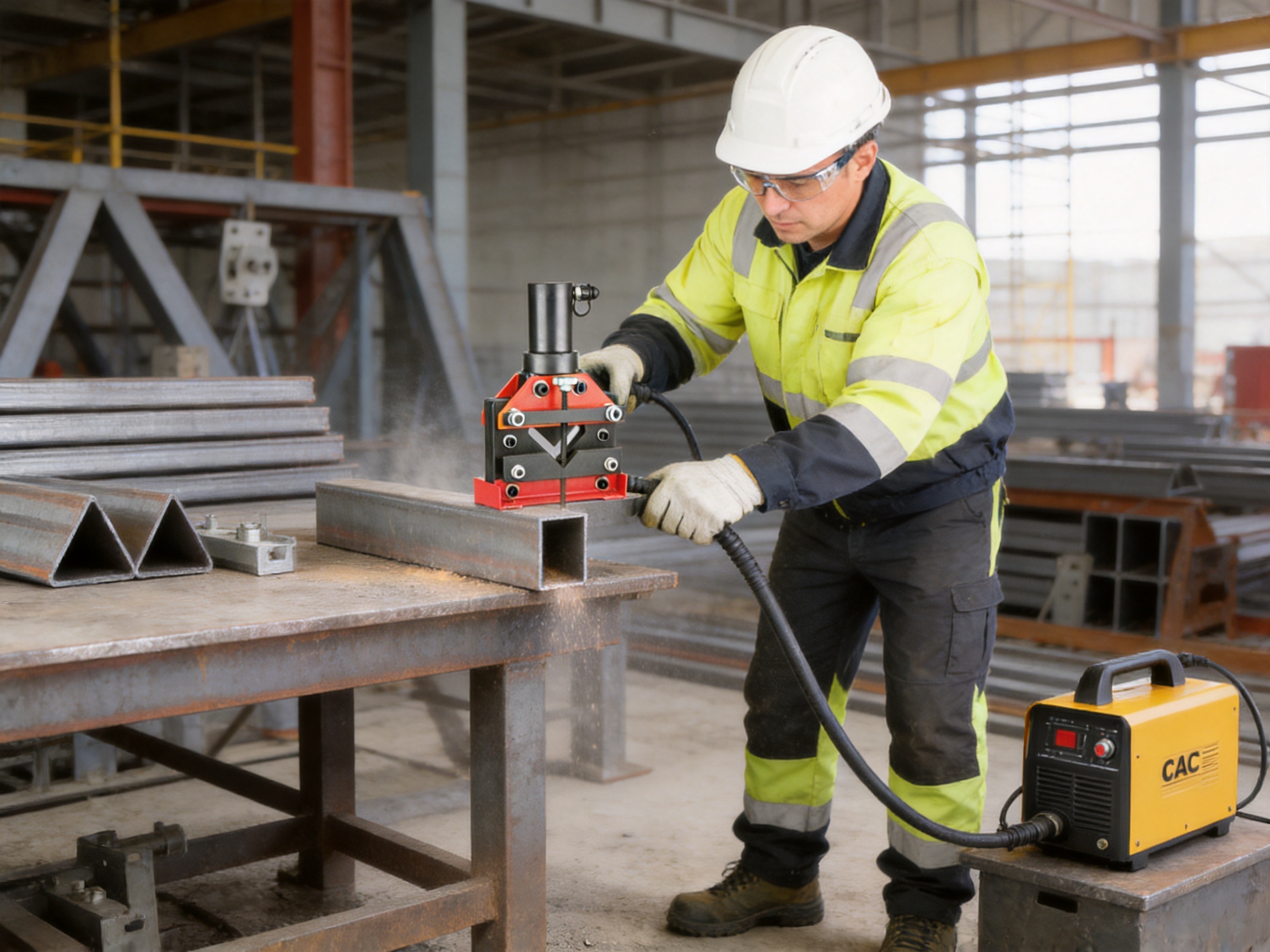
Fabricators use angle steel in frames, braces, supports, racks, platforms, and reinforcement structures. The CAC-110 can assist in preparing angle sections to length before drilling, welding, bolting, or assembly.
When multiple components must be prepared for one project, a dedicated cutter can help organize production. Operators can establish a cutting sequence, mark the material, check each workpiece, and reduce reliance on improvised methods.
Angle steel is frequently used in electrical support structures, equipment frames, cable support assemblies, and utility installations. Field conditions may make it inconvenient to transport every piece to a large machine shop.
A portable hydraulic cutting head can provide on-site processing capability. With the correct pump and safe working area, installation teams can make required adjustments closer to the final assembly location.
Maintenance departments often need to repair or modify support structures, guards, brackets, and access platforms. The exact dimensions required may not be known until the equipment is inspected. A portable angle steel cutter can help maintenance personnel respond to these requirements without waiting for a separate fabrication order.
Construction sites may use angle steel for temporary supports, permanent frames, reinforcement components, and service structures. A hydraulic cutter can be useful when space, power availability, or site conditions make stationary machinery impractical.
Hydraulic tools are also used in demanding rescue and emergency-support environments. While the CAC-110 should only be used for applications within its rated scope and with appropriate training, its hydraulic operating principle and portable split configuration may be relevant to field teams requiring powerful mechanical equipment.
Safe and effective use begins with preparation. Before operation, inspect the cutter body, cutting components, hydraulic connections, hoses, pump, and work area. Confirm that the material falls within the recommended thickness and width range.
Check for visible cracks, deformation, loose fasteners, damaged hoses, leaking couplings, or worn cutting surfaces. Do not operate the cutter if a hydraulic component appears damaged or if the body has been compromised.
Verify that the selected hydraulic pump is compatible with the cutter. Confirm pressure, flow, hose fittings, and control functions. All connections should be clean and securely attached before hydraulic pressure is applied.
Measure and mark the angle steel according to the project drawing or work instruction. Remove dirt, heavy scale, loose coatings, and other material that could interfere with correct positioning. Check that the profile is within the approved operating range.
Place the angle steel correctly in the cutting area. Support long sections so that their weight does not pull the workpiece out of alignment. Keep hands and other body parts away from the cutting zone.
Operate the pump according to its instructions. Apply pressure in a controlled manner and observe the material and cutter during the cycle. Do not attempt to force material that is misaligned or outside the rated capacity.
After the cut is complete, release hydraulic pressure according to the pump procedure. Remove the workpiece only after the mechanism has returned to a safe position. Inspect the cut for accuracy, deformation, burrs, or other conditions requiring correction.
Remove metal debris from the working area, wipe exposed surfaces, and store the cutter in a dry, protected location. Protect hydraulic connections from contamination and cap them when the tool is disconnected from the pump.
Hydraulic tools operate under high pressure and can generate powerful movement. Proper training and protective equipment are essential. Operators should wear suitable eye protection, protective footwear, gloves appropriate for material handling, and work clothing that does not create an entanglement risk.
The cutting area should be kept clear of unnecessary personnel. The operator should maintain a stable stance and avoid placing hands near moving components. Long or heavy angle sections should be supported to prevent sudden movement when the cut is completed.
Never inspect, adjust, or service the cutter while hydraulic pressure remains in the system. Pressure must be fully released before disconnecting hoses, changing components, or addressing a malfunction. Hydraulic fluid injection injuries can be extremely serious, even when a leak appears small.
Do not exceed the stated material range or use the cutter for materials and profiles it was not designed to process. Do not strike the cutter body with hammers or other tools to force a cut. If the tool does not perform normally, stop operation and identify the cause.
Safety procedures should also account for the work environment. Construction sites may contain unstable surfaces, wet conditions, overhead hazards, electrical equipment, or combustible materials. The equipment should be used only after the work area has been assessed and appropriate controls have been implemented.
Regular maintenance supports cutting accuracy, hydraulic reliability, and long-term service life. The maintenance schedule should follow the product documentation and the operating conditions of the user.
Inspect cutting edges and contact surfaces regularly. Worn or damaged components can reduce cut quality and increase the force required for operation. Continued use of worn components may place additional stress on the hydraulic system or cutter body.
Hydraulic hoses should be checked for abrasion, cuts, bulges, aging, and leakage. Couplings should be kept clean and protected from dust. Contamination in a hydraulic system can damage seals, valves, and pump components.
Fasteners and structural connections should be inspected for looseness. If the cutter experiences an abnormal overload, impact, or drop, it should be examined before returning to service. A visual inspection alone may not identify every internal problem, so professional evaluation may be appropriate after a serious incident.
Store the cutter away from excessive moisture, corrosive chemicals, direct weather exposure, and uncontrolled impact. Proper storage is especially important for mobile equipment that may be transported frequently between project sites.
Taizhou Ruiba Tools provides OEM and ODM capabilities and accepts customized production based on customer drawings or samples. This can be useful for distributors, contractors, equipment integrators, and industrial buyers with specific tool requirements.
Customization may involve product configuration, labeling, packaging, connection preferences, design adjustments, or project-specific manufacturing details. Any modification should be evaluated carefully because changes to hydraulic pressure, structural dimensions, cutting geometry, or component materials can affect safety and performance.
A capable manufacturer should be able to review technical drawings, discuss intended operating conditions, identify critical dimensions, and determine whether a requested change is practical. The company’s research and development team, production facilities, CNC equipment, and experience with hydraulic tools provide a foundation for this type of cooperation.
For bulk orders, customers may also benefit from coordinated production planning, quality inspection, packaging arrangements, and after-sales support. Clear communication about material range, hydraulic pump requirements, expected working frequency, and environmental conditions helps ensure that the final tool matches the application.
Angle steel cutting equipment operates under high mechanical loads. The quality of the final product depends on the relationship between design, material, machining, assembly, and testing. A manufacturer with experience across related hydraulic product categories is better positioned to understand these interactions.
Taizhou Ruiba Tools has built its business around hydraulic tools, battery-powered tools, mechanical pliers, and professional equipment for power construction, building, and rescue applications. Its established “JIELEI” product brand reflects its experience in the tool sector, while its broader manufacturing capabilities support product development and production.
The company emphasizes high-quality materials, improved designs, advanced manufacturing technology, and upgraded equipment. It also holds multiple patents and maintains a professional research and development team. These capabilities can support continued product improvement and adaptation to changing customer requirements.
Manufacturing strength is not limited to machinery. It also includes process discipline, worker experience, inspection systems, inventory control, technical communication, and after-sales service. Together, these elements help transform a hydraulic cutter from a basic metal product into a dependable professional tool.
Before purchasing or deploying the CAC-110, users should assess several factors. First, confirm that the angle steel dimensions fall within the thickness range of 3 mm to 8 mm and the width range of 30 mm to 110 mm.
Second, determine whether a suitable hydraulic pump is already available. If not, the pump must be selected as part of the complete working system. Users should consider the power source, working location, expected cutting frequency, hose length, portability, and maintenance requirements.
Third, evaluate the working environment. The approximately 33 kg cutter may be portable for many professional teams, but lifting and positioning procedures should still be planned. If work occurs at height, in confined spaces, or on uneven ground, additional handling and securing measures may be necessary.
Fourth, consider expected production volume. For occasional field cutting, portability and flexibility may be the main advantages. For continuous high-volume production, a stationary processing line or integrated hydraulic ironworker may be more appropriate. The CAC-110 is particularly well suited to users who value a portable, dedicated cutter connected to a compatible hydraulic system.
The value of a hydraulic angle steel cutter should be judged by more than its purchase price. Productivity, operator effort, material waste, maintenance, portability, and compatibility with existing equipment all influence total cost of ownership.
A dedicated cutter can reduce the time required to prepare angle sections compared with improvised methods. More consistent cuts may reduce rework, fitting delays, and unnecessary material loss. Reduced operator fatigue can also support better productivity during extended work periods.
The split design may provide additional economic flexibility when a company already owns compatible hydraulic pumps. One pump may potentially support multiple hydraulic tools, depending on the equipment specifications and connection requirements. This can help users build a coordinated hydraulic tool system rather than purchasing a separate power unit for each tool.
At the same time, buyers should account for hoses, couplings, maintenance parts, operator training, protective equipment, and service support. A complete cost evaluation provides a more realistic comparison with abrasive saws, thermal cutting equipment, or larger fixed machines.
The CAC-110 is designed for angle steel, also known as angle iron or L-section steel. Its stated working range is for angle steel with a thickness of 3 mm to 8 mm and a width of 30 mm to 110 mm.
The maximum force is 350 kN. Actual cutting performance depends on the material dimensions, steel grade, profile position, hydraulic pump, blade condition, and operating method.
The CAC-110 uses a split design and requires a matching hydraulic pump. Customers should confirm the complete supply configuration and ensure that the selected pump meets the required pressure, flow, and connection specifications.
Yes. Its split configuration and approximate weight of 33 kg make it suitable for many mobile workshop, construction, maintenance, and installation applications. Field users must provide a stable working area and a compatible hydraulic power source.
The stated working range is 3 mm to 8 mm. Material exceeding the recommended range should not be processed unless the manufacturer has specifically approved the application and configuration.
Hydraulic shearing can reduce sparks, abrasive dust, and heat input compared with abrasive or thermal methods. It also reduces dependence on consumable cutting discs and can provide repeatable mechanical cutting when the material is correctly positioned.
The pump should be selected according to the cutter’s required pressure, hydraulic flow, connection type, operating cycle, and intended working environment. Users should consult the product documentation or manufacturer before connecting a pump.
Potential applications include structural steel fabrication, construction, electrical and utility projects, industrial maintenance, equipment support manufacturing, field installation, and other professional angle steel processing operations.
Taizhou Ruiba Tools provides OEM and ODM capabilities and accepts customized production based on customer drawings or samples. Custom requirements should be reviewed technically before production.
Operators should check the cutter body, hydraulic hoses, couplings, pump compatibility, cutting components, material dimensions, workpiece support, and general work-area safety. Hydraulic pressure must be released before adjustments or maintenance.
The CAC-110 10mm Angle Steel Cutter is a professional hydraulic solution for processing angle steel within a defined range of 3 mm to 8 mm thickness and 30 mm to 110 mm width. Its 350 kN maximum force provides strong cutting capability, while its approximate 33 kg weight and split configuration support flexible use in workshops and field environments.
Compared with manual cutting, abrasive sawing, thermal processing, and large stationary machines, the CAC-110 offers a practical combination of force, portability, controlled operation, and dedicated angle steel performance. The split design also allows users to match the cutter with a suitable hydraulic pump and potentially integrate it into a broader hydraulic tool system.
Its value is further supported by the manufacturing capabilities of Taizhou Ruiba Tools Co., Ltd., including CNC machining equipment, production workshops, inspection facilities, experienced personnel, research and development resources, OEM and ODM support, and a broad background in hydraulic tool production.
For fabricators, contractors, maintenance departments, utility teams, and industrial buyers seeking a reliable method for angle steel processing, the CAC-110 can provide a strong balance between cutting capacity and operational flexibility. Correct pump selection, proper material positioning, regular inspection, and safe operating practices are essential to achieving the best results.
1. Product specification sheet for the CAC-110 10mm Angle Steel Cutter.
2. Manufacturer-provided technical information concerning maximum force, material range, weight, and split hydraulic configuration.
3. General principles of hydraulic tool operation, pressure management, and hydraulic system safety.
4. Industrial practices for angle steel fabrication, structural preparation, and mechanical cutting.
5. General maintenance principles for portable hydraulic equipment and high-force mechanical tools.
6. Manufacturer information concerning CNC machining, production facilities, quality inspection, research and development, and OEM/ODM manufacturing capabilities.