YunGang Industrial Zone, Yuhuan County, Zhejiang province, China
  +86-18967680938
 Language
 English
 Deutsch
 عربى
عربى
Home / News / Industry News / Battery Cable Shears Factory: The Source for Precision Cable Cutting Tools




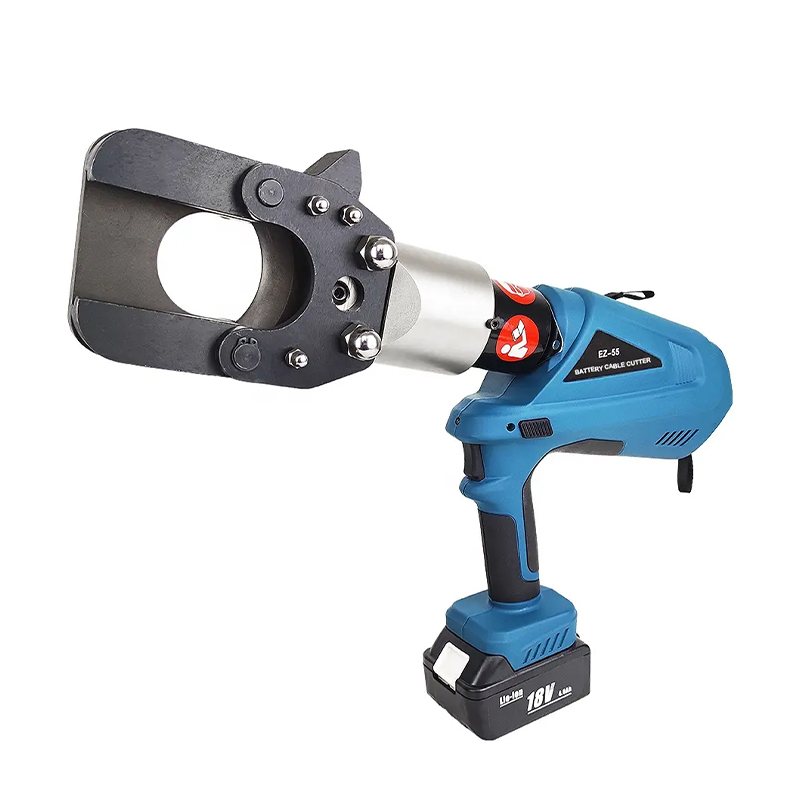
Electrical work involves cables. Battery cables. Welding leads. Heavy-gauge copper conductors. Without a sharp, reliable cutting tool, clean cuts become impossible. A battery cable shears factory produces specialized cutting tools designed for thick, multi-strand copper and aluminum cables. They slice through insulation and conductor in one motion. They leave no frayed ends.
It transforms alloy steel into precision cutting instruments
A battery cable shears factory starts with forged or stamped alloy steel blanks. The blanks are machined to shape, heat-treated for hardness, and ground to a sharp cutting edge. Handles are molded or dipped for grip. The blades are aligned, assembled, and tested on actual cable.
Blade material and forging
The cutting blades come from chrome-vanadium or high-carbon alloy steel. Forging aligns the metal grain structure for strength. A factory that controls forging and heat-treating controls the tool's cutting life.
Heat treatment and edge grinding
Blades are hardened and tempered to a specific Rockwell range. Too hard and the edge chips. Too soft and it dulls quickly. Precision grinding sets the cutting angle and sharpness for years of clean cuts.
Assembly and testing
Blades are aligned on a pivot joint with controlled clearance. Finished shears are tested on copper cable of the rated big diameter. The cut must be clean, without crushing or spreading the conductor strands.
The first cut tells you something. The thousandth cut tells you everything.
A battery cable shears factory ships tools that professionals use daily. Cutting capacity, blade durability, and handle ergonomics matter far more than packaging. Here is what buyers should check.
Cutting capacity and cable type
Shears are rated for a big diameter and material. Copper cuts differently than aluminum. A battery cable shears factory should clearly state the rated capacity and whether the tool handles fine-strand welding cable or solid conductor building wire.
Blade hardness and edge retention
Cutting edges that roll or dull after a few dozen cuts frustrate users. A factory that heat-treats blades to the correct hardness and tests edge retention delivers a tool that stays sharp through repeated professional use.
Handle design and mechanical advantage
Battery cables are thick. The shear requires significant hand force. Compound leverage mechanisms reduce the effort needed. Ergonomic grip shapes and non-slip surfaces improve comfort and safety. A factory that designs for the user's hand builds a better tool.
The shear travels across more industries than most people realize
A battery cable shears factory supplies tools for automotive repair, renewable energy installation, welding shops, and marine electrical work. Anywhere large-gauge cable must be cut cleanly, these shears find a role.
Automotive and fleet maintenance
Mechanics cut battery cables, starter leads, and ground straps daily. A clean cut ensures a solid terminal connection. Frayed strands from a dull shear create resistance and heat at the connector.
Solar and energy storage installation
Battery banks use thick interconnecting cables. Installers cut them to precise lengths on site. The shear must handle fine-strand flexible cable without crushing the copper strands.
Welding and fabrication
Welding cable carries hundreds of amps. Connections must be superb. A battery cable shears factory supplies the tools that welders rely on to prepare cable ends for lug crimping.
Consistent quality distinguishes a reliable factory from a price-only operator
A capable battery cable shears factory documents its heat treatment process. It tests cutting performance on real cable. It ships tools ready to use. Replacement blade availability also matters for long-term supply.
Material traceability
Ask what steel grade is used and where it comes from. A factory that tracks material certifications for each batch runs a professional operation. Vague answers suggest inconsistent sourcing.
Performance testing
A battery cable shears factory should test tools on the cable types they are rated for. A documented test report with cut quality photos carries more weight than a catalog specification. Request samples and test them against the big rated diameter.
A battery cable shears is a simple hand tool. No motor. No battery. But it does one job that matters: it prepares the cable end for a superb connection. A dull or misaligned shear leaves a crushed, frayed conductor that creates resistance and future failure. Choose a factory that controls blade steel, heat treatment, and edge geometry. Your cuts will be clean. Your connections will be solid. That is the contribution of a battery cable shears factory.